
 By Hash Techs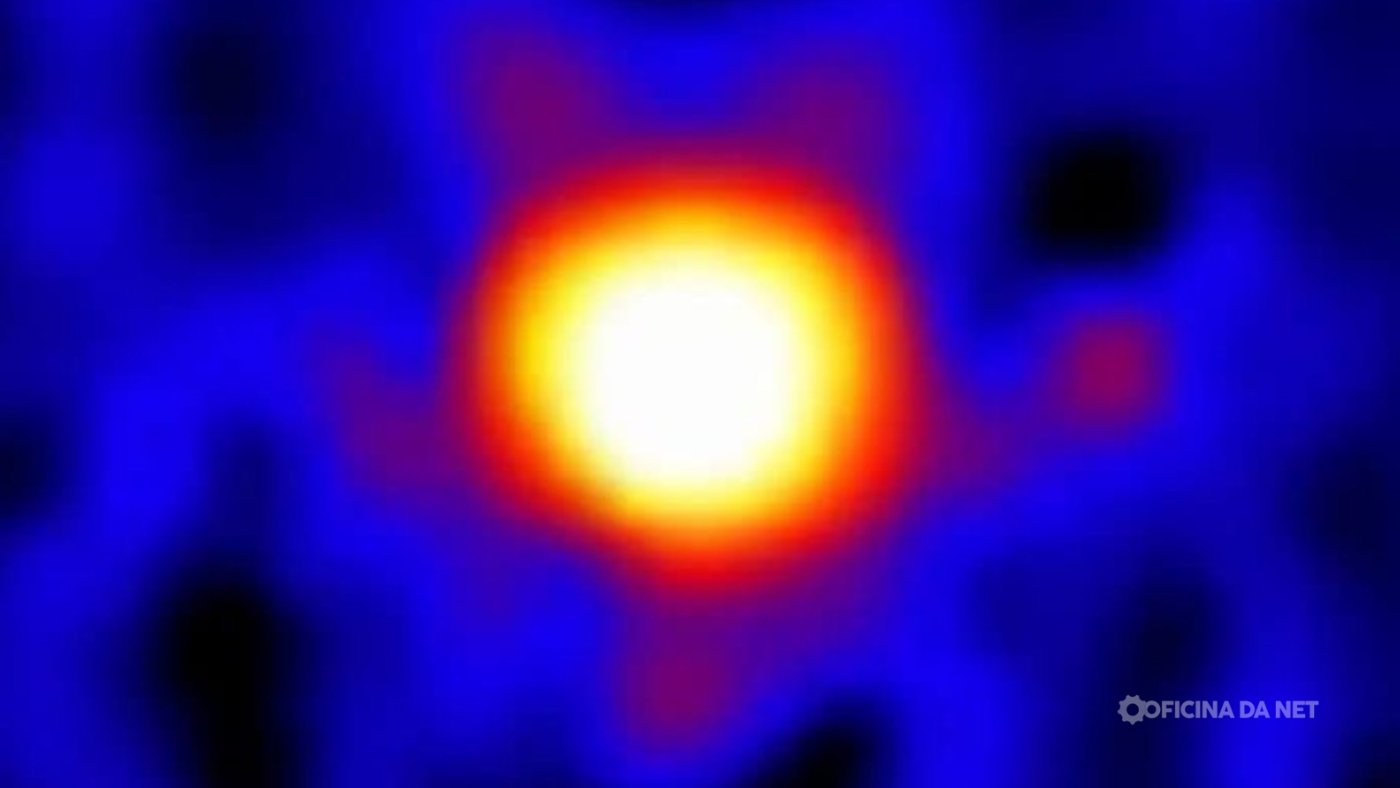
The James Webb Space Telescope observed an impressive event at the center of our galaxy. The supermassive black hole Sagittarius A* in the Milky Way is releasing “cosmic bubbles” in a spectacular display of eruptions, with energy and radiation bursts varying in duration and intensity, leaving scientists amazed.
Summary of essential information to be aware of.
- Sagittarius A* black hole is displaying higher activity than previously thought, emitting strong energy.
- James Webb captured bursts ranging from seconds to months.
- Scientists aim to observe the phenomenon continuously for 24 hours to gain a deeper insight into the pattern of explosions.
Sagittar A* is displaying higher levels of agitation than anticipated.
Scientists were aware that Sagittarius A* was not a completely inactive black hole, but the magnitude of the outbursts was unexpected. These eruptions vary in size and duration, with some being brief and others lasting for months, releasing radiation and energy into space.
This finding enhances our comprehension of the impact of black holes on their galaxies. The research, featured in The Astrophysical Journal Letters, indicates a potential connection between the black hole’s activity and its accretion disk, a swirling mass of matter. Minor disturbances result in ripples, while significant events trigger major outbursts.
The researchers aim to conduct a longer study with continuous 24-hour observations to gain a deeper understanding of the unexpected behavior of Sagittarius A* by eliminating data interference and uncovering meaningful patterns.
Asteroid 2024 YR4 has the potential to impact Earth.
Space organizations such as the European Space Agency predict a 2% probability of asteroid 2024 YR4 colliding with Earth. The likelihood may change as more information on the asteroid’s path becomes available, but potential impact zones have already been identified.
Experts like David Rankin, an engineer at NASA’s Catalina Sky Survey Project, have devised a risk runner to forecast the potential site of a collision. According to Rankin’s estimations, the asteroid is likely to impact:
- South America’s northernmost point
- South Asia refers to the southern region of Asia.
- The sea known as the Arabian Sea
- North Africa region
- The expanse of water known as the Pacific Ocean.